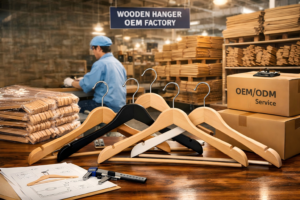
For fashion brands, luxury retailers, hotel procurement managers, and global importers, sourcing wooden hangers is a critical supply chain decision. A wooden hanger is not just a utility item; it is a direct extension of your brand’s presentation and a safeguard for high-value garments.
Partnering with the wrong manufacturer can lead to warped wood, damaged garments, inconsistent branding, and shipping delays that disrupt your retail rollouts. Choosing a professional, reliable manufacturer requires a systematic evaluation of their materials, capabilities, and compliance standards. This comprehensive guide walks you through the essential steps to selecting the perfect manufacturing partner.
Why Manufacturer Selection Matters
A hanger manufacturer is a critical partner in your brand’s visual merchandising and operational success.
Product Consistency
In a retail store or hotel closet, uniformity is key. If your hangers arrive with mismatched wood shades, uneven metal hooks, or varying dimensions, it disrupts the visual harmony of your displays. A reliable manufacturer uses calibrated, automated machinery to ensure every single hanger matches your approved “Golden Sample” exactly.
Brand Image Impact
Your hangers are a tactile touchpoint for your customers. A hanger that is rough to the touch, has a poorly printed logo, or features weak metal hardware instantly cheapens the perceived value of your apparel. Selecting a high-quality manufacturer protects your brand’s reputation for excellence.
Long-Term Supply Stability
As your business grows, opens new locations, or launches seasonal collections, you need a supplier who can scale with you. A financially stable, high-capacity manufacturer guarantees a consistent supply of replacement and expansion stock year after year, protecting you from sudden supply chain gaps.
Evaluate Manufacturing Experience
In the hanger industry, experience translates directly to technical expertise and reliable logistics.
+-------------------------------------------------------------+
|              MANUFACTURER EXPERIENCE CHECKLIST              |
+-------------------------------------------------------------+
|  [  ] 10+ Years of dedicated hanger production.             |
|  [  ] Strong export history to your target market (US/EU).  |
|  [  ] Proven portfolio of successful OEM/ODM brand cases.   |
+-------------------------------------------------------------+
- Years in Hanger Production: Look for factories that have specialized in wooden hanger manufacturing for at least a decade. Over time, these factories have refined their wood-drying, sanding, and lacquering processes, significantly reducing the risk of product defects.
- Export Market Experience: Ensure the manufacturer has extensive experience exporting to your specific region (e.g., North America, Europe, or Australia). Experienced exporters are deeply familiar with international customs clearance, packaging requirements for long sea voyages, and local product safety laws.
- OEM/ODM Project Cases: Ask to see a portfolio of their previous work or client list. A manufacturer that regularly supplies reputable global brands, luxury fashion houses, or five-star hotel chains has already proven they can meet strict corporate quality and delivery standards.
Check Material Quality
The durability and premium look of your hangers depend entirely on the raw materials the factory utilizes.
Wood Species Selection
A professional manufacturer should offer a range of premium hardwood options to suit your budget and brand positioning:
- Beech Wood: Dense, heavy, and exceptionally durable with a fine, uniform grain. The top choice for luxury retail and heavy outerwear.
- Lotus Wood: Lightweight, versatile, and highly cost-effective. The industry standard for high-volume retail displays.
- Walnut Wood: A highly prestigious dark wood with beautiful swirling grains, preferred by luxury tailors and executive hotel suites.
FSC-Certified Wood
Responsible sourcing is non-negotiable. Ensure the manufacturer offers FSC (Forest Stewardship Council) certified wood. This certification guarantees that the timber is legally and sustainably harvested, protecting your brand from heavy penalties under international timber trade regulations.
Moisture Resistance and Durability
Ask about the factory’s kiln-drying process. Raw lumber must be dried to a precise moisture content of 8% to 12% before manufacturing. If the moisture is too high, the hanger will warp or split when shipped to drier climates. If it is too low, the wood becomes brittle and prone to cracking under weight.
Customization Capabilities
To align the hangers with your brand’s unique aesthetic, choose a manufacturer that offers comprehensive OEM customization services.
- Logo Engraving & Branding: The factory should support multiple branding techniques, including high-precision laser engraving, metallic hot foil stamping (gold, silver, bronze), and vibrant silk-screen printing.
- Custom Finishes & Colors: Beyond basic clear coats, you should be able to request custom pantone-matched paint colors, rich wood stains, matte or high-gloss lacquers, and specialty treatments like soft-touch rubberized coatings or velvet flocking.
- Premium Metal Hardware: Evaluate their options for metal hooks and clips. Professional factories offer a variety of finishes (matte black, brushed brass, polished chrome, rose gold) alongside anti-slip clip designs featuring soft inner rubber pads to protect delicate garment fabrics.
- Packaging Customization: Ensure they can package your hangers in custom retail boxes, set-packs, or heavy-duty, double-wall corrugated shipping cartons with built-in moisture protection (silica gel packs) to prevent damage during transit.
Production Capacity & Lead Time
Your supplier must be able to deliver your orders on time, especially during high-demand retail seasons.
| Metric | Industry Standard (Reliable Factory) | Why It Matters |
| Monthly Output | 500,000 to 1,000,000+ pieces | Ensures the factory can easily scale to handle large orders or nationwide rollouts. |
| Lead Time (Standard) | 30 to 45 Days | Allows you to plan your logistics cycles comfortably. |
| Peak Season Stability | Dedicated production lines & material reserves | Prevents delays during busy pre-holiday production rushes. |
Before placing an order, confirm how the factory manages their production schedules during peak seasons (typically Q3 and Q4). A reliable partner will have secure raw material reserves and flexible shifts to keep your delivery timelines on track.
Quality Control Standards
A reliable manufacturer must have a structured, transparent, and rigorous Quality Control (QC) system integrated into every step of their production line.
- Surface Finishing Inspection: Each hanger should be hand-checked or run through automated sensors to ensure a 100% smooth finish with zero splinters, rough edges, or lacquer bubbles that could snag fine silk or delicate fabrics.
- Load-Bearing Tests: Ask the factory how they verify hook and joint durability. They should perform regular pull-out tests to ensure the metal hook is securely anchored into the wood block and can support heavy coats or leather trousers (typically up to 10–15 kg) without pulling out.
- Anti-Slip Performance: For pant hangers, the factory must test the spring tension of the metal clips and the friction of the felt/velvet-wrapped bars to guarantee they hold garments securely on the rack without leaving permanent clamp marks.
Certifications & Compliance
In 2026, importing goods requires strict compliance with international social, environmental, and chemical safety standards. Ensure your manufacturer holds these essential, verifiable certifications:
- FSC Certification: Proves environmental compliance and responsible timber sourcing.
- BSCI / Sedex (SMETA): Verifies social compliance, proving the factory pays fair wages, provides safe working conditions, and strictly prohibits child or forced labor.
- ISO 9001 & ISO 14001: Guarantees standard operating procedures for quality management and environmental protection.
- REACH & Prop 65 Compliance: Confirms that all lacquers, glues, and metal finishes are non-toxic, lead-free, and free from harmful chemicals, meeting strict European and North American consumer safety laws.
Questions to Ask Before Ordering
When interviewing potential manufacturers, ask these critical questions to gauge their professionalism and compatibility with your business:
1. What is your standard Minimum Order Quantity (MOQ) per style?
2. What is your sampling policy, and are sample costs refundable upon bulk order?
3. What warranty or after-sales service policies do you offer for transit-damaged goods?
- MOQ requirements for custom orders typically range from 1,000 to 3,000 pieces per style.
- Sampling lead times should be around 7 to 10 days, and a professional factory will typically refund the sample fee once a formal bulk contract is signed.
- A robust after-sales policy is a sign of a factory that stands behind its work. Ensure they have clear protocols for replacing any items that warp, crack, or get damaged during transit due to improper manufacturing or packing.
Conclusion
Choosing a wooden pant hanger manufacturer is a foundational step in securing your brand’s retail presentation and supply chain stability. While it can be tempting to choose a supplier based solely on the lowest price quote, this approach often leads to hidden costs down the road in the form of warped wood, broken hooks, and damaged inventory.
By taking a methodical approach—evaluating the manufacturer’s export experience, auditing their material quality and FSC certifications, verifying their production capacity, and insisting on strict quality control standards—you can establish a highly successful, long-term manufacturing partnership. A reliable factory is an investment that keeps your brand looking pristine, your supply chain running smoothly, and your customers thoroughly impressed.