The global retail and fashion landscape in 2026 is undergoing a profound structural reset. Once viewed as an afterthought or a transactional cost line, garment hangers have emerged as a critical focal point in circular supply chains. Driven by strict international regulations, shifting consumer expectations, and corporate climate commitments, the transition from virgin plastics to eco-friendly alternatives is accelerating.
As the global clothes hanger market climbs toward new heights, wooden hangers have established themselves as a premier sustainable choice. This guide explores the dominant sustainable wooden hanger trends shaping 2026, helping brands, hotel groups, and global importers align their sourcing strategies with modern environmental standards.
Why Sustainability Matters in Retail
Sustainability in retail is no longer a marketing luxury; it is a fundamental business safeguard. In 2026, the retail ecosystem demands accountability at every level of the supply chain.
Consumer Expectations
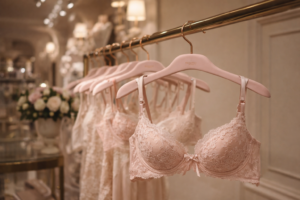
Modern consumers are highly educated on greenwashing and actively seek out brands that demonstrate authentic ecological responsibility. Visual merchandising acts as a physical representation of a brand’s values. When a luxury organic cotton garment is hung on a cheap, non-recyclable virgin plastic hanger, it creates a jarring disconnect that erodes brand trust. Beautifully crafted, sustainable wooden hangers bridge this gap instantly.
European Regulations
Regulatory pressures are forcing the industry’s hand. With the expansion of Extended Producer Responsibility (EPR) programs, packaging waste fees, and strict anti-plastic mandates across the European Union and North America, retailers are facing financial penalties for utilizing single-use or non-recyclable store fixtures. Sourcing compliant, sustainable hangers has become a strategic risk-management decision to avoid heavy environmental levies.
ESG Strategies
Environmental, Social, and Governance (ESG) frameworks now dictate corporate investment and procurement policies. Large-scale retail chains and hospitality groups must show measurable progress in reducing Scope 3 emissions (indirect emissions within their supply chain). Transitioning to low-carbon, renewable retail display fixtures is a highly visible, easily auditable way to advance these corporate climate goals.
Rising Demand for Eco-Friendly Wooden Hangers
To meet these market pressures, manufacturers have moved away from traditional, resource-intensive production methods to embrace circular design principles.
+--------------------------------------------------------------+
|             THE 2026 ECO-FRIENDLY HANGER FORMULA             |
+--------------------------------------------------------------+
|  [ FSC Wood / Bamboo ] + [ Water-Based Lacquer ] =           |
|  100% Biodegradable Core                                     |
|                                                              |
|  [ Recyclable Metal Hook ] + [ Plastic-Free Packaging ] =    |
|  Zero-Waste Store-to-Floor Pipeline                          |
+--------------------------------------------------------------+
FSC-Certified Wood
Forest Stewardship Council (FSC) certification is the baseline requirement for wood sourcing in 2026. Buyers are actively avoiding uncertified timber to protect themselves from legal liabilities under the US Lacey Act and EU Deforestation Regulation (EUDR). FSC-certified wood guarantees that every hanger can be traced back to a responsibly managed forest that preserves biodiversity and respects local communities.
Recyclable Materials
Circular economy principles demand that hangers be designed for easy end-of-life recovery. In 2026, leading manufacturers are producing hangers that can be easily disassembled—allowing the metal hook to be separated from the wood body effortlessly so that both materials can enter their respective recycling streams without contaminating the process.
Natural Coatings
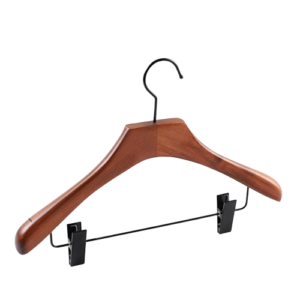
Historically, hangers were coated in high-VOC (Volatile Organic Compound) chemical lacquers to achieve a high-gloss finish. Today, the demand is dominated by raw, untreated finishes, natural oil rubs, and toxic-free, water-based varnishes that preserve the tactile warmth of the wood while eliminating harmful off-gassing.
Popular Sustainable Materials in 2026
Material innovation is driving the evolution of the sustainable hanger market, with three primary substrates leading the industry.
Bamboo
Bamboo has surged in popularity as a premier wood alternative. Technically a fast-growing grass, bamboo can harvest in as little as 3 to 5 years without requiring replanting, pesticides, or heavy irrigation. It is naturally antimicrobial, incredibly lightweight, and boasts a high tensile strength that rivals steel, making it an exceptionally durable, low-carbon option for high-traffic retail environments.
FSC Beech Wood
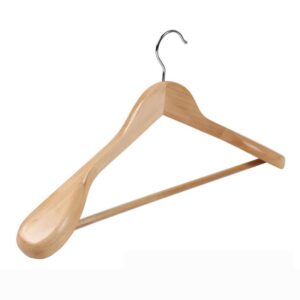
For luxury fashion and heavy outerwear, European beech wood remains the industry favorite. Its dense grain structure, resistance to impact, and longevity mean that a single beech wood hanger can withstand decades of retail use. In a circular economy, extreme durability is its own form of sustainability—reducing the need for frequent replacements.
Recycled Wood Materials
To further minimize raw material extraction, 2026 has seen a massive rise in hangers made from upcycled wood manufacturing waste. By blending post-industrial wood fiber and sawdust with natural, bio-based binders, manufacturers are creating high-density composite hangers that offer the strength and premium feel of solid wood while utilizing 100% recycled feedstock.
Eco-Friendly Manufacturing Trends
True product sustainability is determined by how an item is made, not just what it is made of. Factories are completely re-engineering their production lines.
- Water-Based Painting: Traditional chemical solvents are being phased out in favor of closed-loop, water-based spraying systems. This drastically reduces toxic emissions inside the factories and ensures safe working environments for production line employees.
- Low-Emission Production: Forward-thinking factories are transitioning to renewable energy sources, utilizing rooftop solar arrays and biomass boilers fueled by their own wood-scrap waste to power kiln-drying rooms.
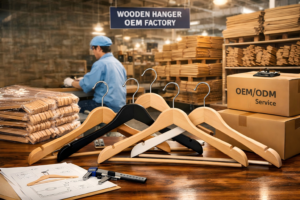
- Waste Reduction Systems: Advanced CNC wood-milling machinery optimizes raw lumber cuts to minimize scrap. Any leftover sawdust or wood chips are systematically collected and compressed into fuel pellets or used in wood-composite manufacturing, achieving a near-zero-waste production cycle.
Minimalist Packaging Trends
The greening of the hanger supply chain extends all the way to how they are shipped. The “zero-waste” shipping box is now standard practice.
Plastic-Free Packaging
The use of individual plastic polybags to protect hangers during ocean transit is rapidly disappearing. Instead, manufacturers utilize thin, FSC-certified tissue paper dividers, biodegradable glassine bags, or nested cardboard layouts that prevent hangers from scratching against one another without relying on fossil-fuel-based plastics.
Recyclable Cartons & Carbon Reduction
Hangers are now packed in right-sized, unbleached, 100% post-consumer recycled corrugated cartons. By eliminating excess packaging volume and utilizing custom nesting algorithms, manufacturers can fit up to 20% more hangers into a single shipping container. This “cube optimization” directly translates to fewer shipping containers on the ocean, lower freight costs, and a significantly reduced transport carbon footprint.
Smart Retail & Sustainable Display Solutions
Technology and circular design are merging to create highly efficient, smart display systems on the retail floor.
Reusable Hanger Systems
Rather than treating hangers as a disposable packaging item shipped with garments from the garment factory and thrown away at the store, retailers are adopting closed-loop Hanger Re-use Programs. Standardized, highly durable wooden hangers are kept in-store as a permanent asset, while garments are shipped in minimal, soft paper bundles, saving millions of tons of waste annually.
RFID-Ready Hangers
Smart retail technology has integrated directly into sustainable hanger design. Premium wooden hangers are now crafted with small, concealed routed slots to house RFID (Radio Frequency Identification) tags. This enables real-time inventory tracking, automated stock replenishment, and seamless interactive mirrors on the sales floor, marrying sustainable craftsmanship with cutting-edge retail efficiency.
Sustainability Expectations from Global Buyers
The push for green procurement is spearheaded by major market players across diverse commercial sectors.
+-------------------------------------------------------------------+
|                   GLOBAL BUYER EXPECTATIONS                       |
+-------------------------------------------------------------------+
|  Fashion Brands:   Demanding FSC wood, customized water-based     |
|                    finishes, and strict brand-aesthetic alignment.|
|                                                                   |
|  Luxury Hotels:    Requiring ultra-durable beech/walnut woods     |
|                    with natural anti-slip coatings (no PVC).      |
|                                                                   |
|  Retail Chains:    Focusing on closed-loop reuse programs,        |
|                    standardized dimensions, and low unit costs.   |
+-------------------------------------------------------------------+
- Fashion Brands: Apparel retailers demand bespoke, aesthetically striking hangers that utilize water-based stains and laser-engraved branding to complement their organic or luxury clothing lines.
- Hotels & Hospitality: Premium hotels are moving away from anti-theft plastic hangers. They prefer heavy-duty, natural-finish wooden hangers featuring organic non-slip velvet or felt-lined pants bars, completely eliminating toxic PVC coatings from guest closets.
- High-Volume Retail Chains: Mass merchandisers focus heavily on volume logistics, demanding standardized, FSC-certified lotus wood or bamboo hangers that can fit seamlessly into their established automated recycling and sorting facilities.
How Manufacturers Adapt to Green Procurement
Sourcing partners must evolve to meet these rigorous standards, transforming their business models from simple factories into transparent, certified supply chain partners.
Certification Upgrades
The world’s leading hanger manufacturers are proactively acquiring verified third-party credentials. Beyond basic quality certificates, factories are heavily investing in annual BSCI (Business Social Compliance Initiative) and Sedex audits to guarantee ethical, fair-wage labor practices, alongside rigorous FSC Chain-of-Custody audits to verify timber origins.
Supply Chain Transparency
In 2026, greenwashing is easily exposed. Reliable manufacturers now offer full, end-to-end supply chain transparency, providing digital tracing documents, carbon footprint calculations per hanger style, and clear chemical ingredient disclosures for all varnishes and glues used in production.
Conclusion
The future of hanger manufacturing is undeniably circular. As we move through 2026, the humble wooden hanger has cemented its role as a premier eco-friendly asset that satisfies regulatory mandates, protects natural resources, and elevates retail presentation.
By prioritizing FSC-certified woods, renewable bamboo, non-toxic water-based finishes, and smart, plastic-free logistics, retailers and importers are not only protecting the planet—they are building resilient, future-proof brands that resonate deeply with the conscious consumers of today and tomorrow.